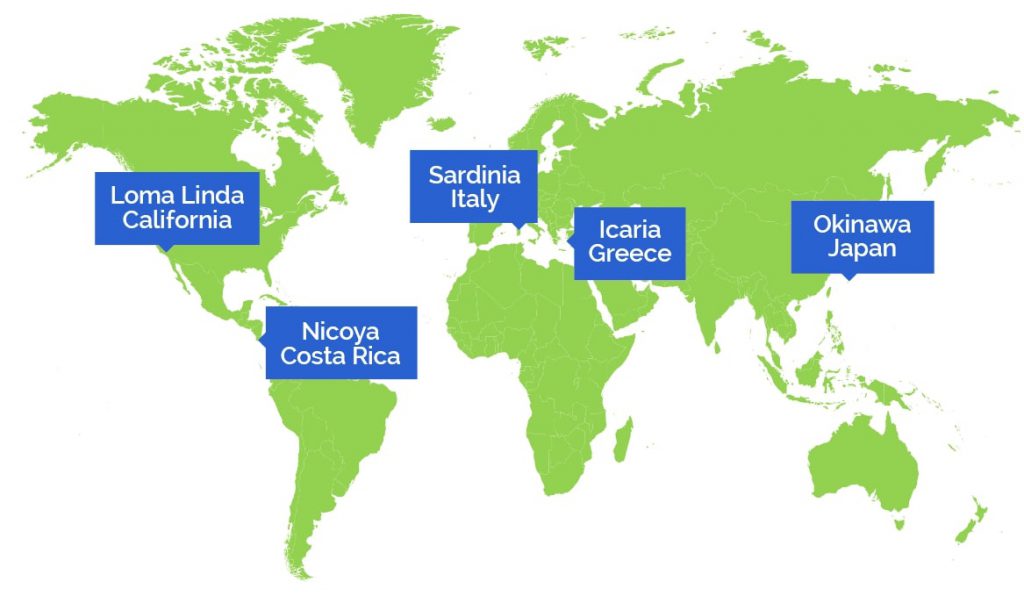
There has been much discussion on the great information coming out about the 5 Blue Zones in medical journals and on streaming services as well. Many people have been asking the noted writer if they too can get the same benefits of living in a Blue Zone, even though they don’t live in one. A large concentration of people lives in cities and areas that are considered highly polluted and the surrounding areas are hazardous. And it is in these areas that are not generally known to produce a large number of centenarians.
Blue Zones are areas that exist throughout the world that have the highest, and a history of the highest rate of centenarians at any given time. The reason that the Blue Zone populations exist is because of the specific and dedicated things that the people are doing to maintain their health and thrive well past the age of 100 consistently. There is a lesson to be learned in all of this: longevity is possible under the right intentional circumstances. That being said, what can we learn from these Blue Zone regions and how can we implement these skills in our daily life? Let’s take examples from a few noted Blue Zone areas in the world and discover some simple ways to make where we live a sustainable Blue Zone in our home.
Okinawa, Japan.
Centenarians in this region are known for eating a high fiber diet and regular consumption of sour bitter melon, mug wort and anti-inflammatory fermented soy and fresh fruits and vegetables. Daily consumption of these foods brings in a large quantity of nutrients and flavonoids. In addition to this they mostly keep their caloric intake to around 1200 calories per day. They also live by a daily code called: ‘Ikigai’- daily life purpose.
How to apply this where you live in your home:
Many Asian and international markets sell sour bitter melon as well as mug wort. Taking a trip to your local international market can provide you with the opportunity to expand your taste that will boost your immune system.
Sardina, Italy.
The core link between the centenarians of that region and what they were doing every day, was in fact, walking with ‘steepness, eating large daily amounts of whole grains and a systematic routine of managing chronic stress. In that region, they found that they used community gathering, laughter and dancing into the night, burning off many calories.
How to apply this where you live in your home:
Get more true whole grains into your diet as much as you can as well as incorporating beans into the mix. Using the stair master at the gym is a prime way and opportunity to walk with steepness in your life. If you have a community you love and cherish: use it to it’s true potential. This helps with managing chronic stress and the ability to cope.
Loma Linda, California.
This moderately small city just east of the city of Los Angeles is a centenarian hot spot. This community prides itself on Plant-Based eating and also being involved in an active community. In addition to this, they stress the importance of volunteering and giving back to serve others. Daily exercise outside is also a part of their centenarian path.
How to apply this where you live in your home:
Now more than ever it is possible to live and to eat a Plant-Based lifestyle at almost any area and place in the United States. By placing a keen emphasis on eating whole grains, beans and legumes, fresh fruits and vegetables, we can set the tone for an overall healthy body and longer life. And with the volunteering opportunities, there are many to be found in your local area and the act of selfless giving often is linked with longer lifespans.
Ikaria, Greece.
The inhabitants of this Greek area have on average, 7 and ½ more years towards their lifespan versus those who live in the United States. On top of that they have half the rate of heart disease as compared to those in the United States. As centenarians, they eat high amounts of herbal teas, rosemary herbs, anti-inflammatory and liberal eating of grapes on a daily basis.
How to apply this where you live in your home:
There are ways you can get herbal teas from many sources these days; you can even grow some of them yourself in your own home. Taking the time to add more rosemary, thyme and oregano to your meals will also be key to heart health and vitality.
Nicoya, Costa Rica.
The centenarians of this central American land eat a large staple of the dish of ‘The Three Sisters’ almost daily and quite often. The dish consists of black beans, squash and fresh corn which provides iron, healthy protein, and nutrients which also help to regulate their blood sugar. While they do keep themselves moving, they also make time to rest with naps and enjoy their lives and families. And with all of this, they also have an idea similar to Ikigai; but theirs is known as: “Plan de Vida”, having a firm focus for their life every day and the drive to live.
How to apply this where you live in your home:
Taking a little extra time to eat the ‘Three Sisters’ formula can bring changes to health, even at three times per week. In our fast-paced and competitive society, how often are we taking time to breathe and slow down our pace? Once again, the importance of having a direction of meaning for our life; we can incorporate the Plan de Vida in almost everything we do and intend.
The overall point? It is that change is possible, and we can defy the odds when we play an active role in our own health outcomes. There seems to be more Blue Zone areas emerging out of newer Asian lands; Singapore is an up and coming one. But your home can be a Blue Zone as well, as much effort as we are willing to put into it. All the best to your health.
___________________________________________________________
©-Copywritten Material.
-Dr. David K. Scott N.D.; CHNP.
*Take a deeper dive with your health and wellness and get your copy of ‘Spark of Life’, written by Dr. Scott. ‘Spark of Life’ takes you on a journey of true Naturopathic healing that addresses our state of nutrition, movement, and mindset, all the while offering concrete solutions that you can apply to your life the first day you read it. Get your copy today.
 NATURES' FIRST PATH: HOlISTIC MEDICINE.